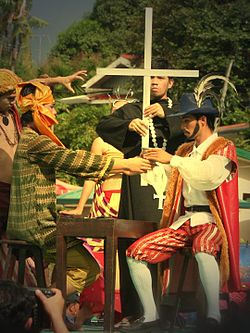
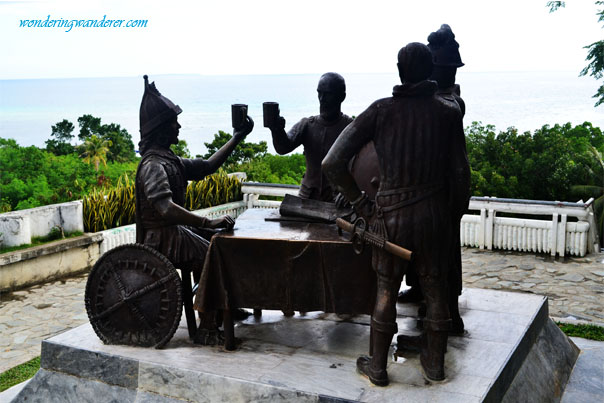
The Blood Compact Shrine in Tagbilaran, Bohol, is a great symbol of friendship and foreign relations. The site’s centerpiece is a monument that depicts the pact of the Bohol chieftain Datu Sikatuna and the Spanish explorer Miguel López de Legazpi.
The Filipino term for “Blood Compact” is “Sandugo” which is a ritual in the past for establishing a friendship. The ritual requires cutting a small wound on the arms, then pouring the blood of both parties into a single cup. The blood is mixed with wine, then divided into two glasses for both parties to drink. No one should leave until the glasses are empty. The literal meaning of Sandugo is one blood.

Exploring the Blood Compact Shrine
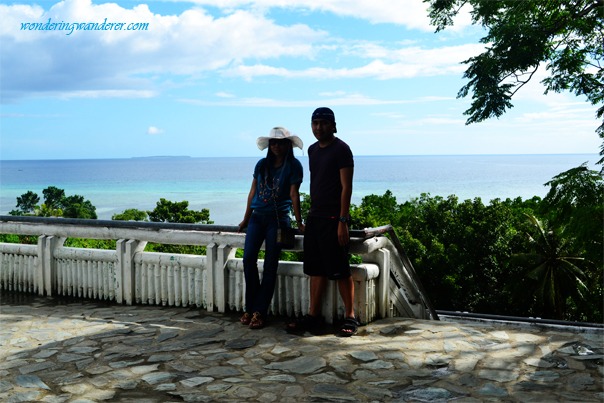
We went here after visiting the Baclayon Church. The statue is strategically located in a park in Tagbilaran, which has a scenic view of the sea. There were some visitors who were lined up to take a photo with these statues when we arrived there.
This is the only statue known to me that represents foreign relations. Most of the statues that I’ve seen are made in honor of a hero, a president or a founder of an organization, unlike this one.
History
This historic ritual was done on March 16, 1565, by Spanish explorer Miguel López de Legazpi and Bohol Chieftain Datu Sikatuna. The Boholanos were actually hesitant in accommodating the Spaniards at first because of the bad treatment they got from the Portuguese fleet, which made 1,000 of their people slaves. With the help of a Malayan sailor, Miguel López de Legazpi was able to help the natives understand that they came to offer friendship and a trade agreement.
Where is Datu Sikatuna in the statue?
This got me confused when I reviewed our pictures. I looked at the men holding the cups very closely, but none of them seemed to be Datu Sikatuna. I even looked online for the painting of Juan Luna’s depiction of The Blood Compact, but all I can see are two Caucasian men with different nationalities (based on armor type).

If you check online pictures of the re-enactment of the blood compact, you’ll see that Datu Sikatuna is wearing a turban, is lightly dressed and is barefoot. But all I can see are two men wearing medieval armors with the other wearing a cape and a metal helmet. The people standing as witnesses clearly have Caucasian features as well.
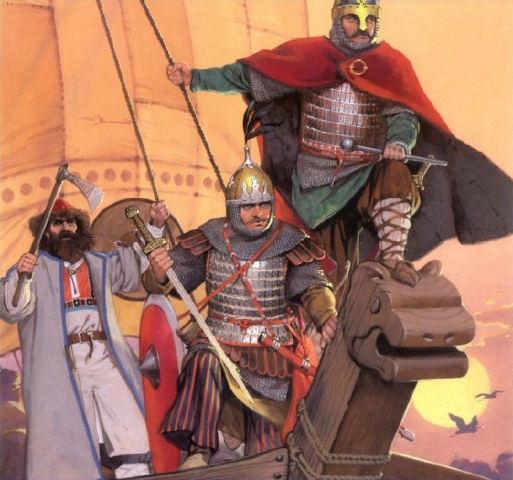
The armor of the person with a helmet and holding a cup reminded me of Byzantine warriors. I tried looking for any information about the origin of this statue from Bohol’s government site. then I also checked out related websites, but I failed to get any.
My wonderings about the Blood Compact Site statue:
– If Datu Sikatuna is one of those men holding the cup, why do both of them look Caucasian? Why are both of them wearing European armor?
– Were there any written accounts that Datu Sikatuna was given medieval armor as a gift?
– If so, why does he look Caucasian?
– Is it a mistake to expect that Datu Sikatuna should be in the statue?
– Was the statue made just to represent the act and not the actual people involved?
– Why depict Europeans doing a blood compact when it’s a practice known to be done by Filipinos only?
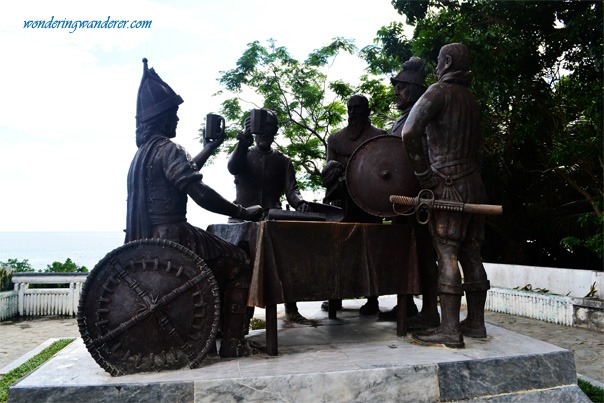
In my humble speculation, the reason why Juan Luna made an art competition entry that depicts a blood compact of two Europeans is that the contest was held in Europe. This is despite portraying the 1565 blood compact. The painting became an inspiration to the maker of the Tagbilaran statue, who based the outcome on the painting.
If you’re from Bohol or are someone who has knowledge about the origin of this statue. Please feel free to leave a comment to shed some light on this mystery.
You may also like:
Bohol Travel Guide: Chocolate Hills, Panglao, Best Resorts & Itinerary
Loboc River Cruise
Chocolate Hills